
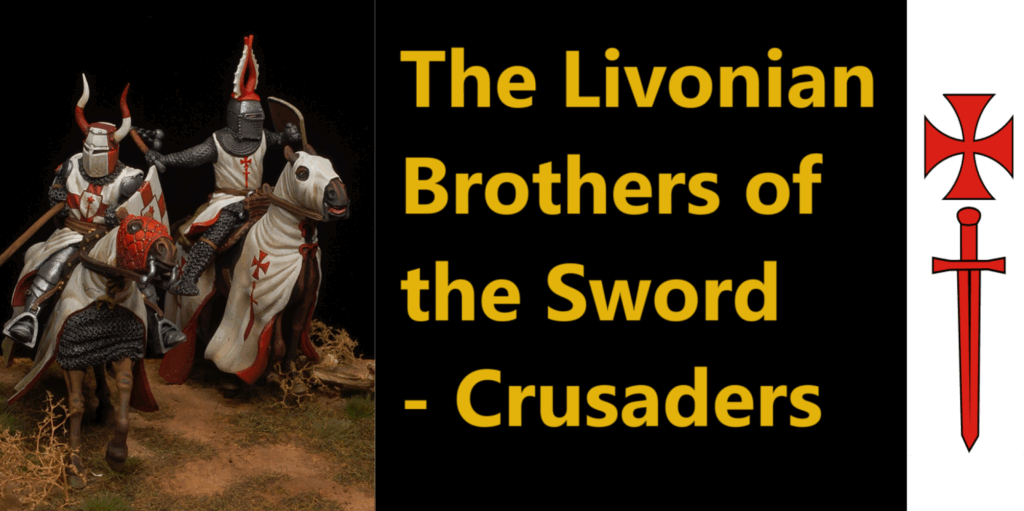
I would like to share a little eyecandy and also a little history about the Livonian Knights, Swerd Brethern or Knights of Dopirn as they were called.
The Livonian Knights, also known as the Livonian Brothers of the Sword, were a medieval military order founded in the early 13th century with the mission to Christianize and conquer the Baltic region. Their journey unfolded with the establishment of the order, crucial battles that shaped their destiny, and ultimately, their demise following the defeat at the Battle of Saule in 1236.Foundation of the Order:

In 1202, Bishop Albert of Buxhoeveden founded the Livonian Knights, inspired by the success of the Teutonic Knights in the Holy Land. The Livonian Brothers of the Sword were initially established to convert pagan Baltic tribes, particularly the Livonians and Latgalians, to Christianity. The order quickly gained support from the Pope and various European monarchs, solidifying its place in the complex tapestry of medieval crusading orders.
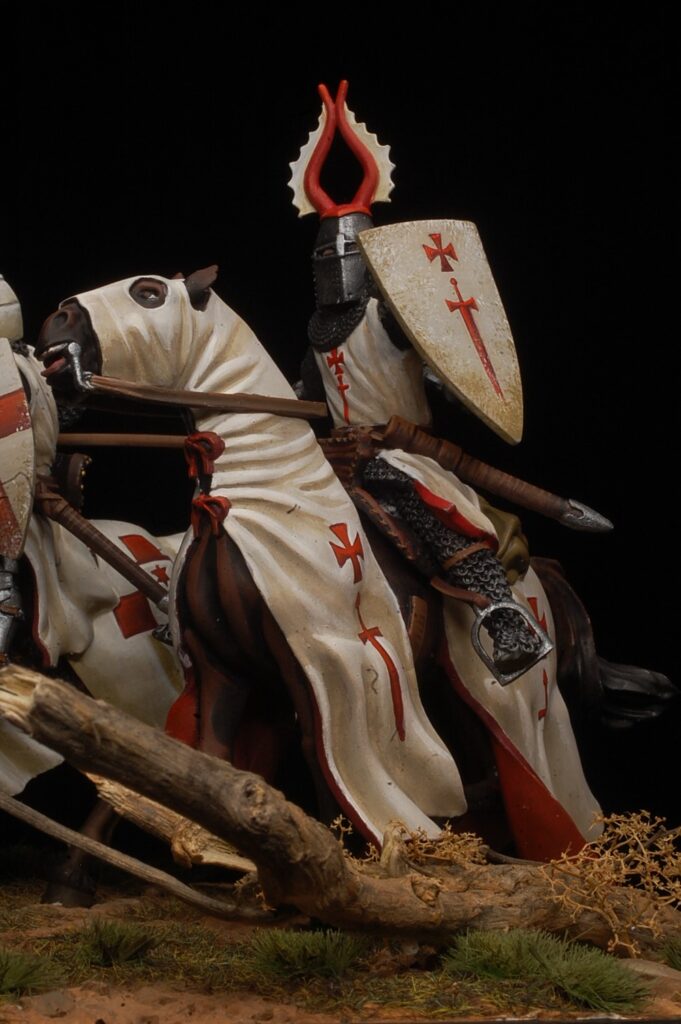
Crusading in Livonia:
The Livonian Knights embarked on a relentless campaign to expand Christendom in the Baltic region. They faced fierce resistance from the pagan tribes, such as the Curonians, Semigallians, and Selonians. The order’s determination and military prowess were evident in the successful conquest of key territories, including the establishment of Riga in 1201 and the capture of the fortress of Koknese in 1209.
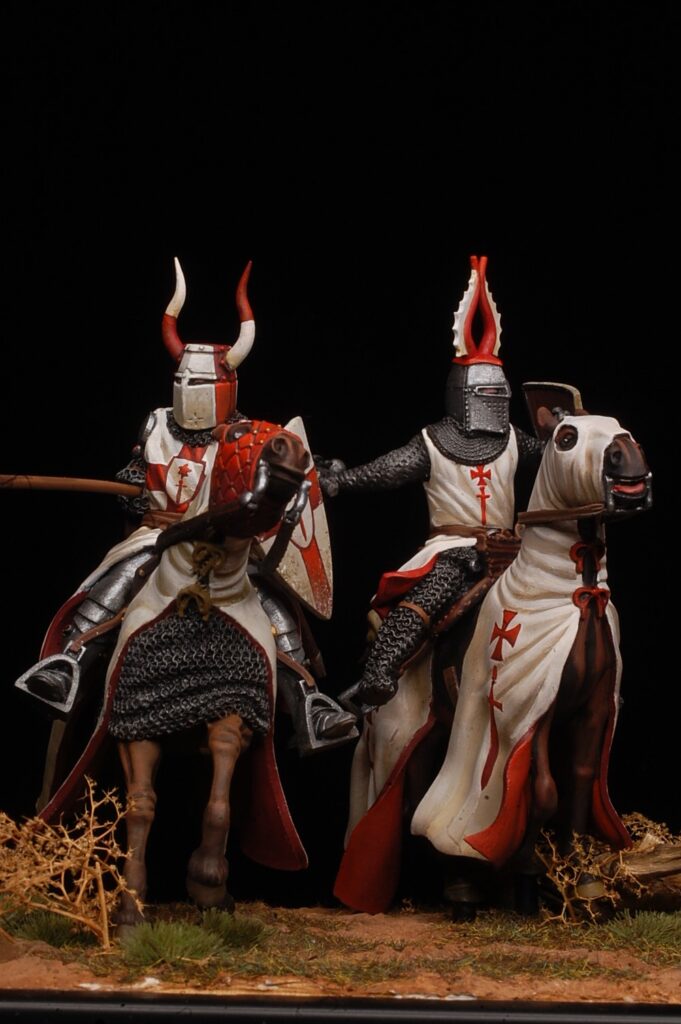
Crucial Battles:
One of the most significant battles in the Livonian Knights’ history was the Battle of Saule in 1236. The order, joined by their allies, faced an alliance of Semigallians, Lithuanians, and Samogitians. Despite their previous successes, the Livonian Knights suffered a devastating defeat. The battle marked a turning point in their fortunes and had far-reaching consequences for the order’s existence.
End and Legacy:
The defeat at Saule proved catastrophic for the Livonian Knights. Many of their prominent leaders fell in battle, and the survivors faced a weakened and demoralized order. In the aftermath, the Livonian Knights merged with the Teutonic Order in 1237, becoming the Livonian branch of the larger organization.
The Livonian Knights’ legacy is complex, embodying both the fervor of medieval Christian crusaders and the challenges they faced in the harsh Baltic territories. Their efforts, successes, and ultimate defeat at Saule contributed to the broader narrative of medieval crusading orders and the clash of cultures in Eastern Europe.
In conclusion, the Livonian Knights played a crucial role in the medieval history of the Baltic region, leaving behind a legacy of religious zeal, military prowess, and the inevitable challenges faced by those who sought to impose their beliefs on foreign lands.
Painting and pictures by: Gian Luca. MASTERMINIATURES